

A 36-inch roller can support broad back and balance work, but it may be awkward in a small apartment or gym bag. A 12-inch model is easier to store and carry, yet it gives you less coverage and may require more repositioning. Choosing among the Best High Density Foam Rollers comes down to how much pressure you want, which body areas you target, and where the roller will live between sessions.
This guide compares firm EPP, polypropylene, and EVA options, along with textured and curved designs. It also considers travel, cleaning, yoga and Pilates use, and whether a complete recovery kit is more useful than a single roller. For related mobility equipment, see our recovery gear category and mobility equipment guides.

Pros
- Compact, travel-friendly 12-inch design
- Firm pressure for targeted massage
- Supports yoga and Pilates exercises
- Water-resistant EPP construction
- Listed 300 lb weight capacity
Cons
- Firm surface may feel intense for beginners
- Shorter length provides less full-back coverage
- Skip it if you prefer gentler cushioning or longer coverage

Pros
- Gentler moderate-compression feel
- Soft-touch surface for bare-skin comfort
- Portable 12-inch size
- Solid-core EVA foam construction
Cons
- Less suitable for users wanting firmer compression
- Limited coverage compared with the 18-inch model
- Who should skip it: users seeking broader muscle coverage

Pros
- Broad 24-inch rolling surface
- Firm, shape-maintaining construction
- Lightweight and easy to reposition
- Wipes clean easily
Cons
- Firm feel may not suit softer-foam preferences
- Who should skip it: Shoppers seeking adjustable firmness
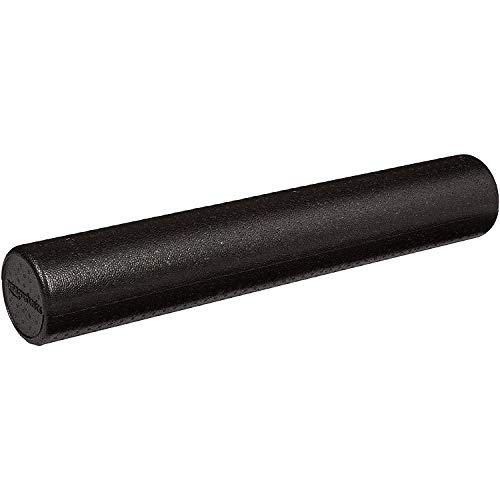
Pros
- Long 36-inch format
- Firm shape-retaining construction
- Lightweight and portable
- Easy-to-clean surface
Cons
- Long size needs more storage space
- Who should skip it: shoppers seeking a compact roller

Pros
- Targeted trigger-point pressure
- Textured surface for deep tissue massage
- Portable 14-inch size
- Suitable for multiple body areas
- Useful for yoga and Pilates
Cons
- Specialized shape may not suit broad rolling
- Published firmness options are not provided
- Skip it if you prefer a traditional smooth roller

Pros
- Includes roller, massage stick, ball, band, and carry bag
- Compact 13-inch roller dimensions
- Waterproof and sweat-resistant materials claimed
- Supports multiple muscle-care techniques
Cons
- Firmness adjustment options are not specified
- Who should skip it: Shoppers wanting detailed safety guidance or adjustable firmness

Pros
- Compact 12-inch length suits most muscle groups
- Solid-core EVA foam construction
- Multi-density grid pattern
- Lightweight at 0.38 lb
Cons
- Who should skip it: people seeking a longer roller
- Compression firmness is not specified

Pros
- Compact 13-inch size
- Firm EVA foam surface
- Hollow core designed to retain shape
- Easy-to-clean surface
Cons
- Firm pressure may not suit users seeking gentler rolling
- Who should skip it: anyone who prefers a softer roller

Pros
- Firm, lightweight EVA construction
- Textured surface for targeted pressure
- Suitable for several mobility practices
Cons
- Shorter coverage than the 24- and 36-inch options
- Who should skip it: people seeking a longer roller

Pros
- Long 36-inch rolling surface
- Firm pressure for deep tissue work
- High-density EPP foam construction
- Lightweight and portable
- Suitable for multiple exercise uses
Cons
- Firm feel may not suit users wanting softer cushioning
- Who should skip it: users seeking a softer foam roller
How to Choose the Best High Density Foam Rollers
Firmness and compression
Density describes the roller’s resistance to compression, but it does not automatically make one model better for every user. Firmer surfaces can provide more direct pressure for experienced users, while softer compression may be more approachable for sensitive areas or people new to rolling.
The ProsourceFit High Density Foam Rollers 12 and Tone Fitness High Density EPP Foam Exercise Foam are listed as firm options for deeper pressure. The Foundation Roller – Premium EVA Foam Muscle is designed for moderate compression and a softer surface, while the TriggerPoint CORE Foam Massage Roller uses softer compression with a multi-density pattern. If you prefer a gentler starting point, prioritize moderate or softer compression rather than density alone.
Length, coverage, and available floor space
Length changes both coverage and handling. A 36-inch roller can provide more support for broad back work and balance exercises, whereas a 12-inch roller is easier to carry and better suited to targeted work. Longer rollers also require more clear floor space when you roll, stretch, or reposition.
The Amazon Basics High-Density Foam Roller is 36 inches long, and the Tone Fitness model is also listed in a 36-inch version. The Amazon Basics High Density Foam Roller and ProsourceFit model listed here are 12-inch options, while the Fitizen roller is 18 inches. The Rollga Point measures 14 inches, and the TRIGGERPOINT Performance Therapy Grid measures 13 inches by 5.5 inches. Measure your storage area and the usable space around your mat before choosing longer coverage.
Surface texture and pressure control
A smooth roller distributes contact more evenly, while grooves, raised areas, or curved sections can make pressure feel more targeted. Textured designs may be useful when you want to focus on a particular tight area, but they can feel more intense and give you less even contact than a basic cylinder.
The Rollga Point has a curved design and a pointed end intended to target trigger points, with wall use described as a way to apply less pressure. The TRIGGERPOINT Performance Therapy Grid has a multi-density surface, and the TriggerPoint CORE uses a multi-density grid pattern. The Fitizen 18 × 6 in Foam Roller for Back & Legs includes a raised surface. Choose a textured model only if targeted pressure matches your routine, and use a smoother design when broad, predictable contact matters more.
Material, shape retention, and cleaning
Material affects feel, upkeep, and the way the roller is described to hold its shape. The listings identify EPP, EVA, polypropylene, or combinations of PVC and EVA. Several products are described as water-resistant or easy to wipe clean, but those statements do not mean every component can be submerged or machine washed.
The ProsourceFit roller is made from water-resistant EPP and is described as hygienic and easy to maintain. Amazon Basics models use polypropylene and are listed as easy to wipe clean. The Performance Therapy Grid has an EVA covering and is also listed as easy to wipe clean, while the Krightlink 5-in-1 Foam Roller Set High Density is described as waterproof, sweat-resistant, and easy to clean. Follow the care directions supplied with the model, especially for kits with multiple materials.
Portability and what is included
A compact roller can be more practical when you carry equipment to a class, office, or trip. A single roller keeps the setup simple, but a kit may let you switch between broad rolling and smaller target areas without buying separate tools.
The Krightlink set includes a 13-inch hollow roller, 15-inch muscle stick, 2.5-inch massage ball, resistance band, and storage bag. Its listing specifies a 200 lb load capacity, so verify that figure against your intended use. The 12-inch ProsourceFit, Foundation Roller, Amazon Basics 12-inch model, and TriggerPoint CORE are more focused single-tool choices. The Rollga Point and Performance Therapy Grid are also portable single rollers, but their specialized surfaces may be less familiar to new users.
How We Compared These Products
We compared the supplied product listings by length, shape, material, compression description, surface design, portability, cleaning information, included accessories, and stated capacity where provided. The recommendations are based on product research and published specifications, not direct use. Customer ratings were supplied in the product data, but no review text was provided, so we do not treat those ratings as proof of a recurring performance result.
Which Option Fits Your Workout?
For limited storage or travel: Consider the yoga and mobility category alongside a compact roller. The ProsourceFit High Density Foam Rollers 12 is a 12-inch EPP option with multiple sizes listed by the manufacturer, including compact formats. The Foundation Roller – Premium EVA Foam Muscle is also offered in a 12-inch version and is described as travel-friendly with moderate compression. Skip either if you need full-back coverage from one pass.
For broad coverage and balance work: The Amazon Basics High-Density Foam Roller is a 36-inch polypropylene model listed for balance, strengthening, flexibility, and recovery exercises. The Tone Fitness High Density EPP Foam Exercise Foam is also listed at 36 inches and is described as firm for advanced users. The trade-off is floor and storage space, so skip these longer models if your setup cannot accommodate their footprint.
For targeted pressure or a broader recovery kit: The Rollga Point – Curved Foam Roller for Headache offers a curved shape and pointed end for more focused pressure. The Krightlink 5-in-1 Foam Roller Set High Density adds a stick, ball, band, and bag. Skip the Rollga if you want uniform contact, and skip the Krightlink set if you only want a single roller without extra pieces.
Balanced pros and cons for the remaining options: The 24-inch Amazon Basics High Density Foam Roller offers a middle ground in length and easy wipe-clean care, but it is less compact than a 12-inch roller and provides less coverage than a 36-inch model. The TriggerPoint CORE has durable solid-core EVA construction and a multi-density grid, but its textured pattern may not suit users seeking a smooth surface. The TRIGGERPOINT Performance Therapy Grid combines a hollow core, EVA exterior, and multi-density pattern, but its 13-inch format and firm feel may not be ideal for people who want broad, gentle contact. The Fitizen 18 × 6 in Foam Roller for Back & Legs offers a medium length, raised surface, and five listed size options, but buyers should select the appropriate size rather than assume the 18-inch version fits every routine. Who should skip these three? People whose priority is either the smallest travel roller or maximum full-body coverage should look at the 12-inch or 36-inch choices instead.
Frequently Asked Questions
Is a high-density foam roller suitable for beginners?
It can be, but firmness varies by construction and surface. Beginners who want less intense compression should compare the Foundation Roller or TriggerPoint CORE, while users seeking firmer pressure should consider the ProsourceFit or Tone Fitness listings and adjust how much body weight they apply.
What length is easiest to store?
The 12-inch options are the most compact listed choices, while 13- to 18-inch models occupy a middle range. A 24- or 36-inch roller offers more coverage but needs more storage and clear floor space.
Which roller is easiest to clean?
Amazon Basics models are listed as easy to wipe clean. The ProsourceFit, Krightlink, and TRIGGERPOINT Performance Therapy Grid listings also describe water-resistant, sweat-resistant, or wipe-clean surfaces. Confirm the care instructions before using liquids on a kit or textured surface.
Do textured rollers provide more pressure?
Texture concentrates contact in selected areas, so it can feel more targeted than a smooth cylinder. It does not guarantee better results, and users who prefer even pressure may find a basic smooth roller easier to control.
Can these rollers be used for yoga or Pilates?
Several listings identify yoga, Pilates, balance, flexibility, or stabilization as intended uses. The ProsourceFit, Tone Fitness, Rollga Point, and Fitizen listings specifically mention these activities. Check the roller’s length and firmness against the exercises you plan to perform.
Should I buy a kit instead of a single roller?
A kit makes sense if you want several recovery tools and value a carry bag. The Krightlink set includes five listed pieces. Choose a single roller if your routine is centered on one tool, or if storing and cleaning multiple items would be inconvenient.




Write Your Review
No reviews yet. Be the first to share your experience!