

If kneeling poses make your knees uncomfortable, a thicker mat is not automatically the right answer. You may need a full-length surface for yoga and Pilates, or a smaller knee pad that adds cushioning only where you need it. The wrong choice can also make standing poses feel less stable, take up more storage space, or create extra cleaning work.
This Yoga Mat Thickness Guide for Bad Knees compares full-size mats from 8mm to 1 inch with separate knee cushions. Use it to weigh joint cushioning against balance, grip, portability, cleaning preferences, and the available floor area in your home. For more options, browse our yoga mats category and the broader yoga equipment section.



1. Match thickness to the exercise
Thickness affects how much foam sits between your joints and the floor, but it also changes how close you are to the ground and how firm the surface feels. The listed full-size options include the 1/4-inch Instructional Cute Yoga Mat with Poses Printed, the 8mm YOTTOY mat, and the 1/2-inch ProsourceFit mat, with that model also offered in a 1-inch version. The product data does not establish that one thickness relieves pain for every person, so treat thickness as a comfort preference rather than a medical solution.
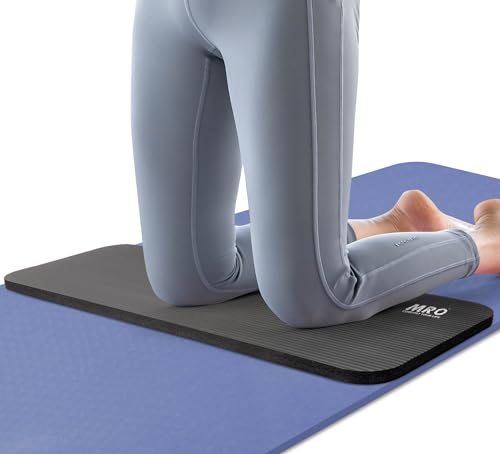
For frequent kneeling, a separate pad can let you keep a firmer full-size mat for standing work. The Kinesis 25mm cushion provides more stated padding than the 15mm Kinesis, MRO, and Heathyoga options, but it is designed as a knee pad rather than a mat replacement. A very thick full-size mat may be comfortable for floor exercises while feeling less precise for balance-focused poses, so consider your mix of kneeling, seated, and standing movements.
2. Check dimensions and usable floor space
Length and width matter when your practice includes stretching, Pilates, or exercises that move beyond a narrow stance. The YOTTOY measures 72 by 32 inches, making it wider than the 68 by 24-inch Instructional Cute mat and the 71 by 24-inch ProsourceFit mat. Extra width can give you more room to reposition, but it also requires a larger clear area and may be less convenient to roll and store.
Knee pads are more targeted: the MRO is listed at 24 by 10 by 0.6 inches, while the Heathyoga is 26 by 10 inches and can also act as a mat extender or headrest. Measure the open area beside your mat, not just the mat itself, especially if you switch sides during lunges or floor exercises.
3. Separate grip claims from balance needs
Several listings describe textured or non-slip surfaces, including the ribbed ProsourceFit design, the textured closed-cell surface on the YOGATI, and the YOTTOY surface described as a flipper-webbing pattern. These are manufacturer claims, not a guarantee of stability on every floor, with every level of perspiration, or in every pose. A buyer who prioritizes standing balance should favor a surface described for grip and verify that the mat lies flat on the intended floor.
The YOGATI adds alignment markings, and the Instructional Cute mat prints 75 yoga poses and 75 stretches. Those visual guides may be useful for beginners who want positioning cues, but printed graphics can be less important if you mainly perform general floor workouts or prefer an uncluttered surface. No listing here provides an independent grip measurement, so avoid treating these features as proof of performance.
4. Compare material and cleaning preferences
Cleaning instructions and moisture behavior can affect whether a mat fits your routine. The ProsourceFit listing specifies water-resistant NBR and recommends wiping it with a wet cloth or sponge before air drying. The YOTTOY and YOGATI listings describe waterproof or closed-cell materials that can be wiped with mild soap and water, while the Heathyoga, MRO, and Kinesis pads are also described as closed-cell and resistant to absorbing sweat or liquids.
Material labels should not be treated as proof that a product is completely odor-free, indestructible, or suitable for machine washing. The YOTTOY instructions call for partial cleaning with cold water and mild detergent, flat drying, and avoiding sunlight. Follow each listing’s care directions, and consider a smaller pad if you want to clean only the area that contacts your knees.
5. Consider carrying and storage
All of the full-size mat listings in this guide include a carrying strap, while the YOTTOY also lists a storage bag. The Kinesis 25mm knee pad includes a breathable mesh bag, and the Heathyoga includes a carrying strap. These features help with transport, but they do not tell you how easily a rolled product will fit in a particular closet, locker, or vehicle.
A full mat gives you a continuous surface but takes more room than a knee pad. A separate cushion is easier to reserve for kneeling and may be useful for travel, yet it leaves your main mat’s cushioning unchanged. If storage is limited, measure the rolled diameter and available shelf length before ordering because the supplied data does not provide those dimensions.
How These Products Compare in Practice
The full-size mats offer different combinations of thickness, dimensions, grip descriptions, alignment or pose guidance, and carrying accessories. The YOTTOY has the widest listed surface, the YOGATI includes alignment lines, the Instructional Cute mat includes printed poses, and ProsourceFit offers the most variation in stated thickness. Their trade-offs are that wider or thicker designs may need more floor and storage space, while visual guides may not suit people who prefer a plain surface. Who should skip these full-size mats: anyone seeking only targeted knee cushioning and who already owns a suitable mat.
The separate cushions focus on kneeling support rather than replacing a yoga mat. The 25mm Kinesis emphasizes extra thickness and includes a mesh bag, the 15mm Kinesis emphasizes wipe-clean NBR construction, the MRO combines 15mm padding with a 24 by 10-inch format, and Heathyoga offers a 26 by 10-inch pad with a strap. Their drawbacks are limited coverage and the need to position them during practice. Who should skip these pads: anyone who needs one continuous surface for standing, traveling poses, or full-body floor movement.
This comparison is based on the supplied product specifications, manufacturer-described design features, care directions, and listed customer-rating information. No direct product use or independent performance measurements are documented, so grip, comfort, odor, and durability should be verified against the current listing and your own requirements.
Which Option Fits Your Workout?
For a home practice that needs extra room: YOTTOY Yoga Mat, 72″x 32″x1/3″ Extra Wide Non-Slip is the clearest fit because its listed 72 by 32-inch size provides more width than the other full-size mats described here. Choose it only if your floor and storage area can accommodate that footprint, and follow its instructions to avoid direct sunlight while drying.
For thick cushioning across yoga and Pilates: ProsourceFit Extra Thick Yoga and Pilates Mat ½” is worth considering because the listing identifies a 1/2-inch version and a 1-inch version, plus a ribbed surface, carrying strap, and wipe-clean NBR construction. Verify which thickness variant is being offered before buying, since the two choices have different cushioning and storage implications. Who should skip it: someone who wants a narrow, minimal mat for balance-focused practice.
For targeted cushioning on an existing mat: Kinesis Yoga Knee Pad Cushion[/acms_link> makes sense when you want the thickest stated knee-pad option in this group, at 25mm, with a mesh storage bag. It is specifically described as a knee pad, not a yoga mat replacement. Who should skip it: anyone who wants cushioning under the entire body during Pilates or floor workouts. For beginners who want visual guidance: [acms_link asin="B08H21593X"]Instructional Cute Yoga Mat with Poses Printed has printed poses and stretches, a 1/4-inch thickness, and a carrying strap. That combination may suit someone learning basic positions in a compact home setup, but readers wanting the thickest available cushioning should compare it with the thicker mats or add a targeted pad.
Frequently Asked Questions
Is a thicker yoga mat always better for bad knees?
No. More cushioning may feel preferable during kneeling, but it can change balance and make a mat bulkier to store. Compare thickness with the poses you perform and consider a separate pad for targeted support.
Can a knee pad replace a full-size yoga mat?
No. The Kinesis, MRO, and Heathyoga products are smaller cushions intended to supplement a mat. They do not provide the continuous surface needed for standing poses, transitions, or full-body floor exercises.
Which listed mat is the widest?
The YOTTOY listing specifies a 72 by 32-inch surface. That extra width can help if you regularly reposition, but confirm that your workout area has enough clear floor space.
Are these mats machine washable?
The supplied instructions describe wiping or partial cleaning with a damp cloth, water, and mild detergent, followed by air drying. They do not establish that any of these products are machine washable, so do not put them in a washer unless the current manufacturer instructions explicitly allow it.
Do non-slip claims guarantee that a mat will not move?
No. A non-slip or textured surface is a design claim, not a guarantee for every floor or workout condition. Place the mat on a clean, suitable surface and verify its behavior before performing movements that require confident footing.
What should beginners prioritize?
Start with the thickness and dimensions that fit your comfort and available space, then consider guidance features. The Instructional Cute mat prints poses, while the YOGATI includes alignment lines, but neither feature replaces choosing a surface that suits your routine.




Write Your Review
No reviews yet. Be the first to share your experience!