

If you practice in a small room, the wrong back stretcher yoga wheel can be awkward to store or too specialized for your routine. A 6-inch wheel may offer more focused contact, while a 13-inch wheel can provide a broader arc for backbends, so the practical choice depends on your mobility goals, comfort preference, and available floor space.
This guide compares nine yoga wheels and wheel sets by size, padding, surface, stability, cleaning considerations, and intended use. It can help you decide whether a compact tool, a single wide wheel, or multiple diameters make more sense for your home practice. For more related equipment, browse our Yoga Wheels category or the broader Yoga section.

Pros
- Three sizes support varied stretching and rolling preferences
- Diamond-textured contact creates a tactile rolling surface
- EVA cushioning softens surface contact
- Rigid PP cores support steady rolling
- Works across several mobility and recovery routines
Cons
- Three fixed sizes may not suit single-size preferences
- Who should skip it: shoppers wanting adjustable firmness
Pros
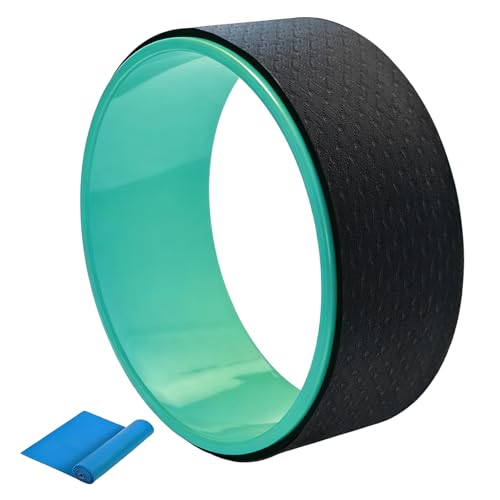
- 13-inch diameter for back-opening stretches
- Cushioned contact points
- Listed 500 lb capacity
Cons
- Capacity claim is not independently verified
- Who should skip it: shoppers needing another size

Pros
- Compact size for targeted stretching
- Non-slip cushioned surface
- Useful across yoga, Pilates, and mobility work
Cons
- Who should skip it: users wanting a larger roller

Pros
- Four sizes support varied mobility and massage work
- Thick foam padding cushions contact points
- Wide padding may help balance during poses
- ABS cores support up to 500 lb
Cons
- Four-piece set may be more than some users need
- Who should skip it: Shoppers seeking a single roller

Pros
- Cushioned TPE foam exterior
- Anti-slip tread pattern
- ABS inner tube
- Designed for multiple stretches and poses
Cons
- Who should skip it: Shoppers needing a stated user weight limit or cleaning guidance

Pros
- Two wheel sizes offer different pressure levels
- Cushioned cork TPE surfaces
- Wide padding for yoga postures
- Stated 500 lb core capacity
Cons
- Who should skip it: buyers seeking one roller size
- No individual wheel widths or weights listed

Pros
- Wide, gripped frame for stability
- Thick padding for stretching comfort
- Advertised 440 lb capacity
- Lifetime manufacturer warranty
Cons
- Fixed 13-inch size may not suit every user
- Cleaning guidance is not provided
- Who should skip it: Users seeking adjustable cushioning

Pros
- Extra-wide profile for added stability
- Beginner-oriented starter exercise guide
- Includes stretching strap
- Supports stretching and mobility work
Cons
- Material is not specified
- Weight capacity is not specified
- Who should skip it: shoppers needing stated load limits

Pros
- Cushioned TPE surface
- 13-inch diameter for deeper stretches
- Wider padding for balance
- Listed 500 lb capacity
Cons
- Size descriptions conflict
- Who should skip it: shoppers seeking a smaller roller
How to Choose Among the Best Back Stretcher Yoga Wheels
Match the wheel diameter to your intended movement
Diameter changes how a wheel contacts your back and how much space it occupies during use. The Furnhome Back Roller Wheel 3 Pack includes 13-inch, 10.6-inch, and 6.7-inch options, so you can shift between a broader arc, a general rolling feel, and more focused contact. The FARINOK Cork Roller, Yoga Wheel, Upgraded Back Wheels combines a 13-inch wheel with a 4-inch wheel, while the FARINOK Yoga Wheel for Back Pain Relief listing describes a four-piece set with 13-inch, 10-inch, and 6-inch sizes.
A single 13-inch wheel is simpler to store and may suit people mainly practicing supported backbends, but it gives you less size choice. The Gaiam 6″ Mini Yoga Wheel (Fawn) is the most compact diameter listed here and is aimed at targeted back, chest, spine, and shoulder mobility. Choose a larger wheel for a broad support surface, or a smaller option when focused contact and compact storage matter more. Verify the dimensions against your mat area before ordering.
Consider padding, texture, and pressure control
Padding affects how direct the wheel feels against your back, hands, and feet, but thicker foam is not automatically better for every movement. The NGT 13 Inch Yoga Wheel for Back Pain Relief specifies thick padding and a sweat-resistant design, while the Body Sport Yoga Wheel, 5 in. x 12.6 in. lists 14.30 mm of TPE foam padding and an anti-slip tread. The Gaiam mini lists 5 mm of cushioning, which may appeal to someone who wants a more compact, less cushioned prop.
Texture also changes the experience. Furnhome uses diamond-textured EVA contact surfaces, and the FARINOK products describe foam padding with water- and sweat-resistant surface technology. These are manufacturer-stated features, not a guarantee that every user will find the contact comfortable. If you are sensitive to pressure, prioritize the padding description and choose a size that lets you control how much of your body rests on the wheel.
Check stability and the stated load information
A stable wheel is easier to position during slow mobility work, but a non-slip claim cannot guarantee identical performance on every floor. The NGT listing specifies a 500 lb capacity and an ABS-based construction, the FARINOK listings specify a 500 lb capacity, and Zenocity’s Yoga Wheel 13 ”,Yoga Back Roller,Yoga Wheel specifies a 440 lb capacity. The Body Sport model lists an ABS inner tube and impact-resistant construction, but the supplied data does not state a capacity.
The Extra Wide Jumbo Yoga Wheel – Wider emphasizes increased width and stability for beginners and includes a starter guide and stretching strap according to its listing. Its wider format may take more room than a standard wheel, so it is a reasonable fit when balance confidence is more important than compact storage. Before using any model for a demanding pose, check the current manufacturer instructions, stated capacity, and the condition of the wheel and floor surface.
Balance versatility against storage space
Multiple wheels expand the range of contact sizes, but they also add pieces to store. Furnhome’s three sizes and FARINOK’s four-wheel set are useful for people who want to vary pressure or body area without buying separate tools. The two-wheel Cork Roller set offers a middle ground, with a 13-inch wheel for broader posture work and a 4-inch wheel for more focused massage-style use.
A single wheel is easier to keep with a mat or carry to a class. Zenocity, NGT, Body Sport, and the listed single FARINOK model each center the routine around one larger wheel, while Gaiam’s 6-inch mini is designed for compact use. The extra-wide Pete’s Choice model may be less convenient for tight shelving or a small workout corner. Measure your storage location, not just your exercise area.
Review surface care and sweat handling
Yoga wheels contact skin, clothing, and sometimes a sweaty mat, so the surface description matters. The FARINOK listings specifically describe water- and sweat-resistant surfaces that are easier to clean, and NGT describes its padding as sweat-resistant. Body Sport says its TPE foam does not trap odors, while the other listings do not provide enough care detail to establish a particular cleaning method.
Do not assume that a sweat-resistant exterior makes the entire wheel washable. Follow the product’s current care instructions, wipe the contact surface after use, and allow it to dry before storage. If easy cleanup is a priority, favor the models with explicit surface-care information and verify whether your preferred cleaner is compatible with the material.
How We Compared These Products
We compared the supplied product descriptions, listed dimensions, materials, padding details, stated capacities, surface claims, included items, and available ratings. This guide is based on product research rather than direct use, so comfort, floor grip, and long-term durability should be confirmed through the current listing, instructions, and return terms.
Which Option Fits Your Workout?
For varied mobility routines: The Furnhome Back Roller Wheel 3 Pack is the clearest match when you want three diameters for different contact areas. Its EVA cushioning, rigid PP cores, and diamond texture are specified in the listing. The trade-off is storing three wheels, and you should skip it if you only want one simple prop for occasional stretching.
For a compact targeted tool: The Gaiam 6″ Mini Yoga Wheel (Fawn) suits a small space or a routine focused on upper-back, chest, and spine mobility. Its 6-inch diameter, 5 mm padding, plastic core, and non-slip cushioning are listed features. You should skip it if your priority is a broad 13-inch backbend support surface.
For a wider, beginner-oriented design: The Extra Wide Jumbo Yoga Wheel – Wider emphasizes extra width, stability, a starter guide, and an included stretching strap. It may be appropriate when a broader platform feels more approachable, but its larger format may not suit tight storage. Skip it if you need multiple diameters or the smallest possible prop.
Other options fill specific gaps. NGT offers a single 13-inch wheel with a stated 500 lb capacity and sweat-resistant padding. Zenocity lists a 13-inch wheel with TPE tread, thick padding, and a 440 lb capacity, plus a lifetime warranty claim that should be confirmed before purchase. Body Sport is a lightweight 12.6-inch design with TPE foam and an ABS inner tube. The single FARINOK model combines a 13-inch wheel with 10 mm TPE padding and a stated 500 lb capacity. The two-wheel FARINOK Cork Roller adds a 4-inch focus wheel and a stated 500 lb ABS core. Each has a narrower use case than a multi-size set, so skip any of them when the listed diameter or surface does not fit your routine.
Frequently Asked Questions
What size yoga wheel is useful for back stretching?
A 13-inch wheel offers the broadest arc among the commonly listed full-size options and is described for backbending or posture work. A smaller wheel can provide more focused contact, but it may not provide the same broad support. Choose based on the movement you plan to practice and verify the dimensions.
Are these wheels suitable for yoga and Pilates?
The Gaiam mini is specifically described for yoga, mobility, Pilates, and exercise. Several other listings describe yoga, stretching, backbends, or mobility use, but compatibility with a particular class or pose depends on the instructor’s guidance and the wheel’s size and capacity.
Is a thicker wheel pad always more comfortable?
No. Thicker padding may soften contact, while thinner padding can provide a more direct feel and may preserve a compact profile. Comfort depends on your body, the pose, and how much pressure you place on the wheel, so compare the listed padding and surface material rather than assuming thickness alone decides the fit.
How should I clean a yoga wheel?
Follow the manufacturer’s care directions and wipe the exterior after sweaty sessions. FARINOK explicitly describes water- and sweat-resistant surfaces, and NGT describes sweat-resistant padding, but those claims do not establish that the entire product can be submerged or machine washed.
Do multiple wheel sizes justify the extra storage?
Multiple sizes can help you vary contact and pressure across mobility work. They are most useful when you regularly switch between broad stretching and focused rolling. If your routine centers on one type of pose, a single wheel may be easier to store and carry.
Can a stated weight capacity guarantee safety for every pose?
No. A stated capacity is one specification, not a guarantee for every movement, floor, or user position. Stay within the manufacturer’s instructions, inspect the wheel before use, and stop if the surface, core, or padding shows damage.




Write Your Review
No reviews yet. Be the first to share your experience!