

After a hard workout, you may want a cooling option that stays flexible around a knee or shoulder, or one you can refill with the ice already in your freezer. Choosing the wrong format can mean limited coverage, extra freezer space, or a damp bag that is inconvenient to clean and store. Reusable Gel Ice Packs vs Refillable Ice Bags for Post Workout Cooling comes down to how you train, where you apply cold, and how much setup you want after each session.
This guide compares gel packs and refillable bags for home recovery, travel, and targeted post-workout use. It focuses on cooling format, body coverage, securing the pack, storage, cleaning, and the difference between a pre-filled pack and one that uses household ice. For more recovery equipment, see our Recovery category.


Pros
- Flexible when frozen
- Reusable gel interior
- Double-sealed seams
- Extra-thick nylon exterior
Cons
- No straps for hands-free positioning
- Medium size may not suit larger coverage needs
- Who should skip it: Shoppers needing an integrated wrap or straps


Pros
- Reusable gel-bead fill
- Pliable after freezing, according to the listing
- Two different surface textures
- Hand strap for holding
Cons
- Compact dimensions limit coverage
- Who should skip it: shoppers seeking a large or hands-free wrap

Pros
- Four packs for alternating use
- Flexible when frozen
- Supports hot and cold therapy
- Compact size for targeted areas
Cons
- Small size limits broad-area coverage
- Requires more than six hours for frozen state
- Who should skip it: shoppers needing full-body coverage

Pros
- Reusable hot and cold therapy
- Wide opening for easier filling
- Foldable and portable design
- Includes a cover
Cons
- Hot water must stay at or below 122°F
- Users wanting a ready-to-use gel pack should skip it


Pros
- Six reusable, refillable bags
- Adjustable ties for hands-free use
- Three-layer construction
- Wide-tab clip closure
Cons
- Fixed 6.5-by-14-inch dimensions
- Who should skip it: shoppers needing a different size or tie-free pack

Cooling format and refill convenience
Gel packs are ready to place in the freezer, so they avoid filling, draining, and resealing a bag. The FlexiKold Gel Soft Flexible Ice Packs for Injuries uses a pliable gel interior, while the Gel Beads Ice Pack Ice Bag with Strap-1 Pack and Gel Ice Packs Reusable, 4 Pack Small Hot Cold are also listed as flexible when frozen. That can be useful when you want a quick option after lifting, running, or a mobility session.
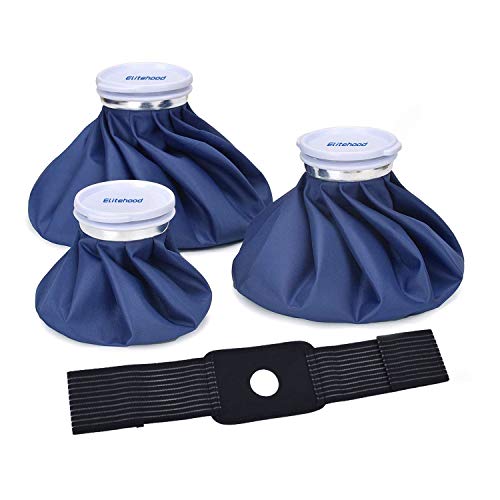
Refillable bags use ice cubes or crushed ice, which can be easier to replace during a long recovery routine. Pallesen Refillable Ice Bags with Clamp Closure, Vakly Large Refillable Ice Bags 6.5 x 14 [Pack, BICAREE Ice Pack for Injuries Reusable, and elitehood Reusable Ice Bags for Injuries all specify wide openings. The trade-off is that you need access to ice and must empty and dry the bag between uses.
Coverage, shape, and body-area fit
Match the cooling surface to the area you plan to cover. The listed gel options range from small packs for wrists, feet, joints, and facial areas to the 7.5 by 11 inch FlexiKold model and the 11 by 14.5 inch Reusable Ice Packs for Injuries. The larger formats may make more sense for a back, hip, shoulder, or thigh, but they also need more freezer space and may be less convenient for a small joint.
Refillable bags can change shape as ice and water move inside them. The Comfortable Reusable Medical Large Ice Bags are listed at 6.5 by 14 inches, and the Comfpack Ice Pack for Shoulder is designed around shoulder coverage. Before buying, compare the listed dimensions with the body area you want to cover, then check whether your freezer can store the gel pack flat or accommodate ice production for a refillable bag.
Securing the pack during recovery
A pack that stays in position is more practical when you are seated, reading, or doing gentle mobility work. Pallesen, Vakly, and Comfortable Reusable Medical Large Ice Bags list four ties, while elitehood includes a compress wrap. The Gel Beads Ice Pack Ice Bag with Strap-1 Pack lists a rear strap for hand holding. These features can reduce the need to hold the pack, but ties and wraps add parts that should be kept clean and checked for a suitable fit.
The larger gel packs in this guide emphasize flexible coverage rather than an included body wrap. If you choose one of those, plan for a towel or separate method to keep it positioned. Verify the intended body area and how the pack is held before choosing it for a shoulder or another location that is difficult to reach.
Materials, leakage, and cleanup
Refillable bags generally separate a soft outer layer from an inner layer that contains melting ice. Pallesen, Vakly, and Comfortable Reusable Medical Large Ice Bags specify three-layer construction with an absorbent middle layer and a leak-resistant inner layer. BICAREE and elitehood list leak-resistant cap designs, while Comfpack specifies a waterproof PVC inner layer and sealing-ring lid. These are listing claims, so inspect the closure and follow the manufacturer’s care instructions when the bag arrives.
Gel packs avoid loose ice and may be simpler to wipe after use, but the supplied information does not establish that every exterior is machine washable. Several products list sealed or leak-resistant construction, including FlexiKold, Gel Beads, Blobuste, and Everlasting Ice RX. Keep any pack dry in storage and verify whether the cover or exterior can be cleaned with your preferred method.
Freezer space, portability, and heat versatility
Gel packs occupy a fixed shape in the freezer, although the smaller four-pack from Blobuste can be rotated through use. The listing for Everlasting Ice RX specifies two 11 by 14.5 inch packs, so measure a shelf before choosing that format. Refillable bags can be emptied and folded for storage. Comfpack specifically lists a storage bag and a foldable design, which may suit a gym bag or travel setup when you do not want to carry a rigid frozen item.
Some listed products are also intended for heat use. BICAREE and elitehood specify hot and cold therapy, and FlexiKold, Gel Beads, Blobuste, and Everlasting Ice RX list hot-and-cold use. Heat instructions differ by product, and BICAREE and elitehood specify limits for hot water. Do not assume that a cold pack is microwave-safe or suitable for hot water unless its own listing provides that information.
How We Compared These Products
We compared the supplied product listings by design, stated dimensions, filling method, closure, straps or wraps, hot-and-cold claims, portability features, and available listing information. The guide is based on product research rather than direct use, and advertised leakage resistance, cooling duration, flexibility, and comfort should be treated as manufacturer claims rather than independently demonstrated results. Customer ratings supplied for these listings did not include written review evidence, so they were not used to establish recurring performance patterns.
Which Option Fits Your Workout?
Choose a gel pack for quick, targeted freezer storage
If you want a pre-filled option for a knee, ankle, face, or shoulder and prefer not to handle loose ice, consider the Cold Packs category options such as FlexiKold Gel Soft Flexible Ice Packs for Injuries. Its listed pliable gel interior and 7.5 by 11 inch size support flexible placement. Skip it if you specifically need a refillable bag, included tie straps, or a pack that can be emptied for compact storage.
Choose a refillable bag for frequent household ice access
If your priority is adding ice as needed and securing coverage around a limb, Pallesen Refillable Ice Bags with Clamp Closure lists a wide opening, clamp closure, three-layer construction, and four tie straps. Skip it if your routine has no convenient ice supply or if you prefer a freezer-ready pack with no refill step.
Choose a larger or shoulder-focused design for broader coverage
For broader areas, compare the listed dimensions and attachment method rather than assuming one format will fit every body area. The Comfpack Ice Pack for Shoulder lists a shoulder-focused wrap, refillable design, foldable storage, and a stated two-hour cooling claim. Skip it if you need a small face or ankle pack, or if the shoulder-specific shape does not match your intended use.
Other conditional choices include the elitehood Reusable Ice Bags for Injuries for shoppers who want three listed sizes and a support wrap, Blobuste for shoppers who prefer four smaller gel packs for rotation, and Reusable Ice Packs for Injuries for shoppers seeking two large gel packs. Their trade-offs are the same: check freezer space, body-area fit, and whether the listing’s heat or flexibility claims match your routine before buying.
Frequently Asked Questions
Are gel packs or refillable ice bags better after exercise?
Neither format is automatically better. Gel packs are simpler to freeze and place, while refillable bags use household ice and can be emptied between sessions. Choose based on your freezer space, ice access, body area, and tolerance for filling and cleanup.
Can these products fit every knee, shoulder, or ankle?
No. Sizes and shapes vary. Compare the supplied dimensions with the target area, and pay attention to products with ties, straps, wraps, or a shoulder-specific design.
Do refillable ice bags need water as well as ice?
Several listings describe adding ice and water, while their wide openings also accept ice cubes or crushed ice. Follow the individual manufacturer’s filling guidance rather than assuming every bag uses the same ratio.
Are all of these packs suitable for heat therapy?
No. Heat use is product-specific. BICAREE and elitehood provide hot-water guidance, and several gel products list hot-and-cold use. Verify the exact instructions before heating any pack, and do not transfer one product’s temperature guidance to another.
How should I clean and store a reusable cold pack?
Empty refillable bags, wipe exterior surfaces, and allow them to dry before folding or storing. For gel packs, wipe the exterior and verify whether any included cover is washable. The supplied data does not establish that every product is machine washable.
Can I use a cold pack directly on skin?
Use the product’s supplied directions and consider a fabric barrier when required. The listings mention soft coverings or comfort surfaces for some models, but they do not create one universal application rule for every pack.




Write Your Review
No reviews yet. Be the first to share your experience!